
Smart Home Improvement Contractors Denver: 2026 Guide for Denver, CO Residents
Most homeowners in Denver wait too long. Not because they don’t care about their properties, but because no one has given them a straight answer about when a small problem crosses into expensive territory. We work with home improvement contractors Denver residents rely on across the metro, from Washington Park bungalows to newer builds out in Stapleton, and the pattern we see most often is this: the homeowner noticed something months ago and talked themselves out of calling.
This post is about those things you noticed. We’re going to tell you which ones you can watch for a season and which ones require a call this week.
Why Denver’s Climate Accelerates Damage Faster Than Most Cities
Denver averages over 300 days of sunshine, but that statistic is misleading. What it doesn’t capture is the freeze-thaw cycling that hammers foundations, siding, and rooflines between October and March, or the UV intensity at 5,280 feet that degrades caulk, paint, and roofing materials faster than sea-level cities. A crack that would stay stable in Nashville or Portland is actively widening here every time the temperature swings 40 degrees in a day, which happens regularly on the Front Range.
That seasonality matters when you’re deciding whether to book now or wait. Spring is our busiest window, and by the time neighbors in Green Valley Ranch and Highlands start calling in April, our crews are already scheduled weeks out. Booking a project in late winter, or at minimum getting an inspection on the books, typically saves Denver homeowners real money in both avoided damage and scheduling priority.
The U.S. Census Bureau’s 2024 Survey of Construction found that spending on residential improvements and repairs exceeded $500 billion annually, reflecting sustained homeowner investment in renovation. Demand in competitive metro markets like Denver continues to push lead times longer each season.
Eight Warning Signs That Mean You Should Call a Pro Now
1. Stair-Step Cracks in Brick or Block Mortar
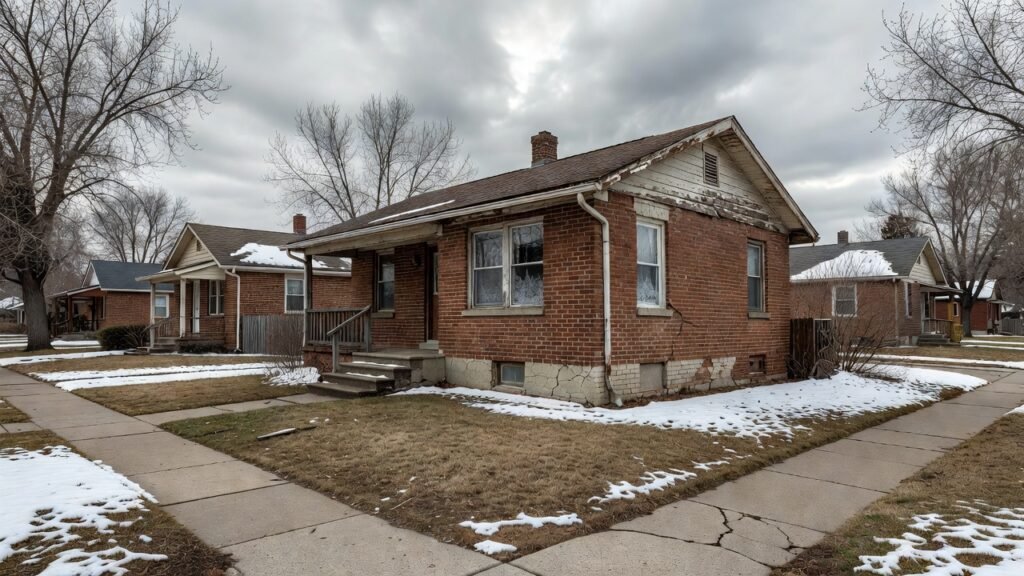
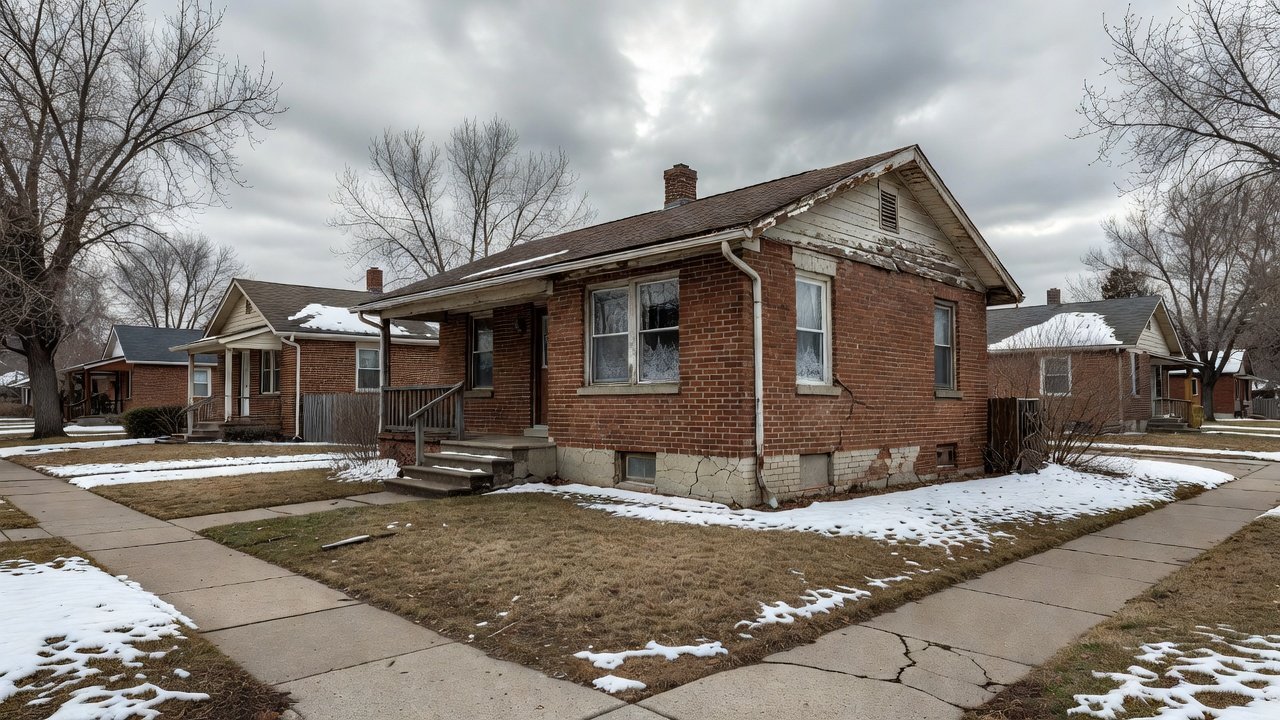
You can see these at the corners of your foundation or along exterior brick courses. Hairline cracks running horizontally or diagonally in a stair-step pattern are not decorative aging. In Denver’s clay-heavy soils, particularly in older neighborhoods like Sunnyside and Berkeley, these patterns indicate differential settling that worsens with each freeze cycle. Call now. Waiting a winter can turn a $3,000 mortar repair into a $15,000 structural remediation.
2. Interior Doors That Stopped Latching in the Last Six Months
A door that suddenly won’t latch, even though it latched fine last year, is telling you the frame around it has moved. In a single-story home, this is often a foundation issue. In a two-story, it can also signal a failing beam. Either way, this is not a door problem. Call now.
3. Frost or Condensation on the Inside of Windows During Winter
A little condensation on a cold morning is normal. Frost on the interior glass surface, or persistent water pooling on your window sills between November and February, means your insulation and air sealing have failed around those units. In Denver winters, that failure is actively driving up your heating bill and introducing moisture into the wall cavity. Call now for an insulation and window assessment before next heating season starts.
4. Gutters Pulling Away from the Fascia
Walk your perimeter after the next heavy rain. If you see daylight between the gutter and the fascia board, or if water is spilling behind the gutter rather than through the downspout, your fascia is likely rotting from the inside. Left alone through one more Colorado snow load, that section fails completely and water begins entering the wall system. Call now. This is a two-hour fix before it becomes a two-week project.
5. Siding That Sounds Hollow When You Knock on It
Tap your exterior siding in several places. Wood or fiber cement siding should sound relatively solid. A hollow or papery knock in a localized area usually means moisture has gotten behind the panel and the substrate underneath is deteriorating. We see this frequently on west-facing walls in homes across Lakewood and Wheat Ridge, where afternoon UV exposure is relentless. Call now if you find hollow sections larger than your hand.
6. White Chalky Residue on Your Basement Walls
That white powder is efflorescence, and it means water is moving through your foundation wall and depositing minerals on the surface. The moisture source could be grading, gutters, or a failing drainage membrane. On its own, efflorescence is a watch-it sign. Combined with any dampness, musty smell, or visible mold, it becomes a call now situation immediately.
7. Soft Spots in the Floor Near Plumbing Fixtures
Press your foot firmly around the base of toilets, under kitchen sink cabinetry, and near dishwashers. Any give or springiness in the subfloor means moisture has been sitting there long enough to compromise the wood structure. This does not resolve on its own. Call now. By the time you can feel the softness, the damage typically extends further than the soft spot itself.
8. Roof Granules Collecting in Your Downspout Discharge
After a rain, check where your downspouts discharge onto the ground or into a splash block. If you see dark, sand-like granules collecting there, your shingles are shedding their protective coating. A roof in this condition has one to three seasons of functional life left, depending on hail exposure. Keep an eye on it if your roof is under 15 years old and the granule loss is light. Call now if the roof is older or if you had hail this past season, which the Denver metro sees heavily from May through August.
The Cost of Waiting: A Real Number
We quoted a homeowner in the Sloan’s Lake area last February on a siding repair that was clearly visible the previous fall. By the time he called us, the moisture had wicked into two wall cavities, the insulation needed replacing in both bays, and the repair cost had climbed from roughly $2,200 to just over $7,800. That gap is what waiting one Denver winter costs when the underlying problem involves water infiltration.
As of 2026, material costs in the Denver metro remain elevated compared to the pre-2022 baseline. Labor scheduling windows are also tighter. The homeowners who lock in assessments and project slots in late winter consistently get better pricing and faster start dates than those calling in April or May.
The National Association of Home Builders reported in 2024 that the average kitchen remodel ranges from $25,000 to $75,000 depending on scope, materials, and regional labor costs. In a high-demand metro like Denver, waiting even one season can mean a 10 to 15 percent increase in your final project cost due to contractor availability and material pricing.
What Professional Oversight Actually Gets You
We pull permits. We carry current Colorado contractor licensing. Our project managers coordinate inspections so you’re not left holding liability for work done without proper sign-off. A 2024 Harvard Joint Center for Housing Studies report found that homeowners who invest in professional renovation see 15 to 20 percent higher satisfaction scores compared to DIY projects of equivalent scope. That gap is even more pronounced when the work involves structural, moisture, or envelope systems, which is exactly the type of work most of these warning signs point toward.
If several of these signs are showing up at once, our full-property assessment packages often bundle multiple repairs at a reduced mobilization cost. That same visit might also surface an opportunity for a kitchen or bathroom update you’ve been putting off, and combining scopes in a single project is almost always more economical than scheduling them separately.
Ready to Get a Straight Answer Before Spring Rush Hits?
Our team serves homeowners across Denver, including Capitol Hill, Highlands, Stapleton, Green Valley Ranch, Sloan’s Lake, and the surrounding suburbs. If you’ve seen any of the signs above, don’t wait for warmer weather to make the call. Contact A1 Construction and Renovation Service today to schedule a project assessment. We’ll tell you exactly what needs attention now and what you can reasonably monitor, with no pressure and no guesswork. Reach us at a1constructionandrenovationservice.com.
Frequently Asked Questions
How do I know if a home improvement contractor in Denver is actually licensed to work on my property?
In Colorado, general contractors performing structural, electrical rough-in coordination, or work over a certain dollar threshold are required to hold state and local licensing and pull permits through Denver’s Community Planning and Development office. Before hiring any contractor, ask for their license number and verify it through the Colorado Department of Regulatory Agencies. At A1 Construction and Renovation Service, we provide our licensing credentials upfront and handle all permitting as a standard part of our process, not an add-on.
What time of year is best to book a home improvement contractor in Denver, CO?
Late January through mid-March is the sweet spot for most exterior and interior projects. Crews are more available, material lead times are shorter, and you can get on the schedule before the spring rush that starts in earnest around April. For roofing and siding specifically, late summer after hail season often works well, but that window fills fast. The worst time to start looking is right after a major weather event, when every contractor in the metro is fielding calls simultaneously.
Can I get a rough estimate without committing to a full project?
Yes. Our team offers property assessments where we walk the home, document what we find, and give you a written scope with honest cost ranges before you commit to anything. This is especially useful when you’ve noticed multiple warning signs and aren’t sure what’s urgent versus cosmetic. We’d rather spend an hour giving you an accurate picture than quote a low number to win the job and surprise you later. Call or visit our site to schedule yours.
Related from A1 Construction & Renovation: Smart Home Improvement Contractors Houston · Back Home Addition & Renovation in Los Angeles, CA · Back Home Our Los Angeles, CA — A1 Construction & Renovation


