
Smart Exterior Renovation Services Houston: 2026 Guide for Houston, TX Residents
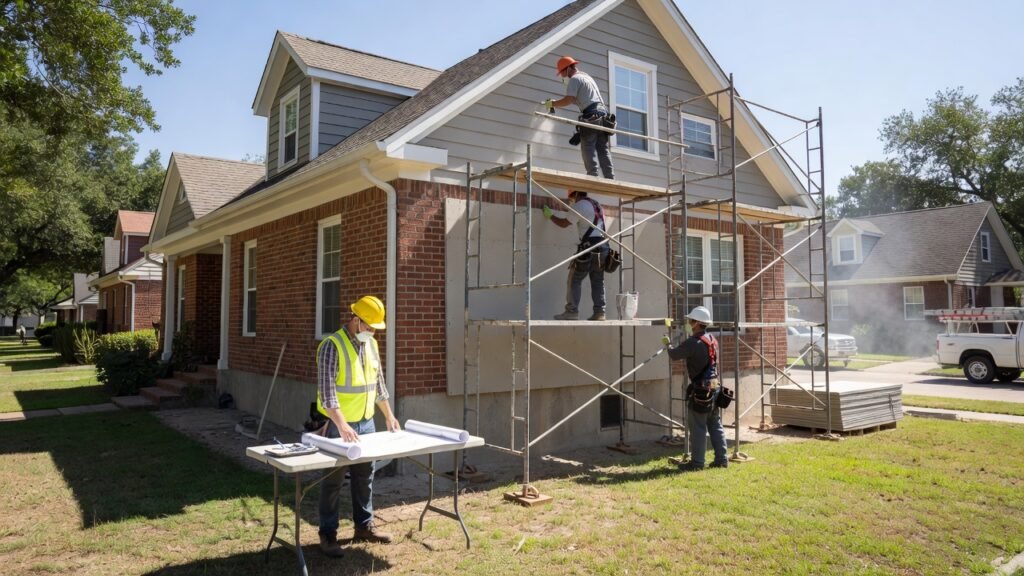
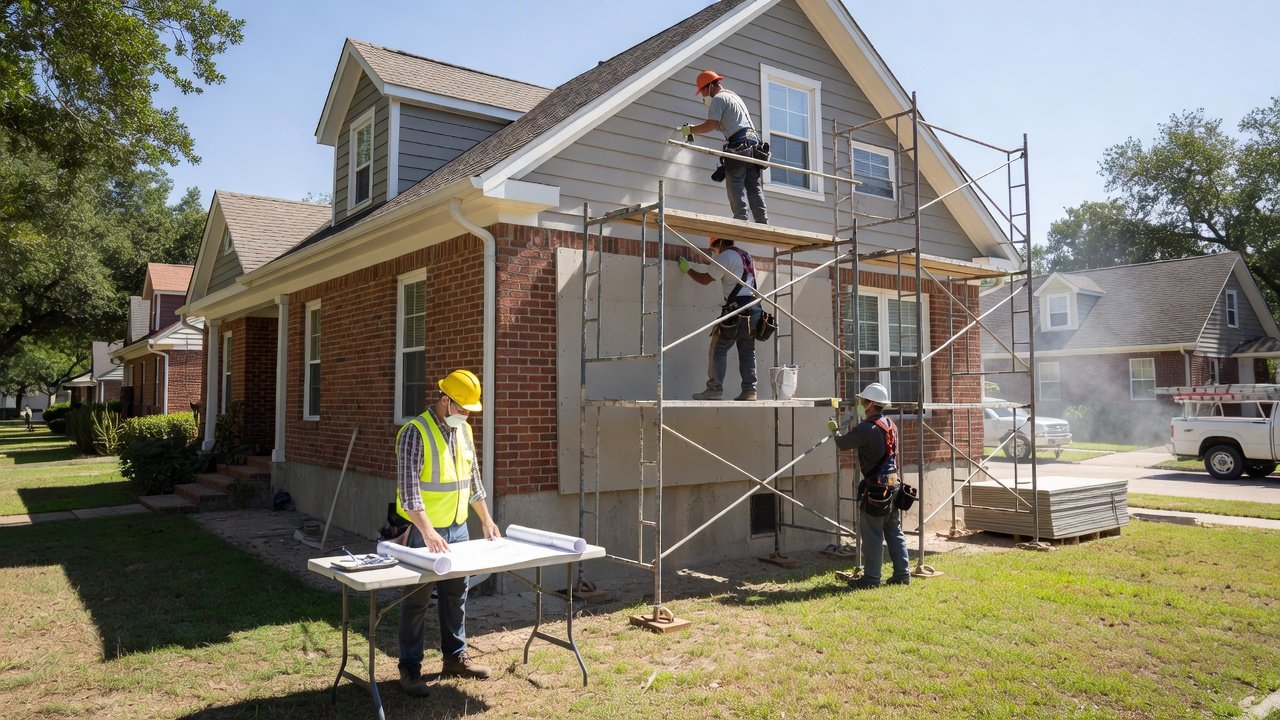
A homeowner in Meyerland called us last fall after a contractor had already torn off a section of her fiber cement siding without pulling a single permit. The work stopped, the fines started, and she was left with exposed sheathing going into hurricane season. We hear variations of that story every month across Houston, from Kingwood down to Pearland and over to Katy. Exterior renovation services in Houston carry real stakes: the climate is punishing, the permitting rules have teeth, and the wrong decision early in a project cost far more than the decision itself. This guide walks you through how to get it right.
Before You Start: Know What Houston’s 2026 Code Environment Means for You
As of 2026, the City of Houston enforces updated wind-load requirements for exterior cladding, roofing, and window replacements requirements that tightened following recent storm seasons. If your property sits in Harris County but outside Houston city limits, unincorporated areas still fall under county-level oversight for certain scopes. Before any contractor touches your house, know which jurisdiction governs your address. Our estimators pull that detail on every project in The Heights, Sugar Land, and Friendswood because the inspection pathway differs depending on where you live, and a failed inspection means a project sitting idle.
Also document your current exterior before any demo begins. Photograph every elevation, note existing drainage patterns, and identify any prior repairs that may not have been permitted. That record protects you if questions come up during inspection.
Step 1: Define the Scope Before You Talk to Anyone
The single biggest mistake we see homeowners make is calling contractors before they have a written scope. “I want to redo the outside of my house” is not a scope. It produces wildly inconsistent quotes and gives unscrupulous bidders room to low-ball the number, then add change orders later.
Sit down and list every element you want addressed: siding material and coverage area, soffit and fascia condition, window and door trim, any masonry or stucco sections, gutters, and exterior paint or coating. Even a rough list forces apples-to-apples comparisons when multiple crews bid the job. Our project managers in West University Place and Bellaire have seen quotes on identical houses range by $40,000 simply because the scope was never pinned down.
Step 2: Vet the Contractor Before the Price Conversation
Price is the last thing you should discuss, not the first. Before any number comes up, verify the following: a current Texas contractor registration, general liability insurance with limits appropriate for exterior work (at minimum $1 million per occurrence), and workers’ compensation coverage. Ask for the certificate directly from the insurer, not a document the contractor emails you.
Check the Texas Secretary of State’s business search and the Better Business Bureau for complaint history. A company operating in Houston for exterior renovation services should have documented references in your general area — not testimonials from three states away.
“OSHA data indicates that projects managed by licensed general contractors have significantly lower incident rates than self-managed or unlicensed construction work, underscoring the safety value of professional oversight.”
That isn’t abstract. Exterior work involves ladders, rooflines, and power tools at height. Uninsured incidents on your property become your liability problem.
Step 3: Select Materials That Actually Hold Up in Houston’s Climate
What works in Denver or Seattle fails here. Houston’s combination of high humidity, intense UV exposure, and periodic impact-level wind events eliminates certain product categories entirely. Untreated wood siding, for example, is a maintenance burden most homeowners in this market regret within three years. We routinely recommend fiber cement for siding because it resists moisture, holds paint well under UV load, and meets the wind resistance requirements the 2026 code updates formalized.
For roofing elements associated with exterior renovation, impact-rated shingles (Class 4) often qualify for insurance premium discounts in Harris County. That’s worth a direct conversation with your insurance carrier before materials are ordered.
The U.S. Census Bureau’s 2024 Survey of Construction found that spending on residential improvements and repairs exceeded $500 billion annually, reflecting sustained homeowner investment in renovation. In a market like Houston where storm damage cycles keep exterior renovation demand high, material lead times fluctuate. Order early, and get delivery dates in writing.
Step 4: Understand the Permit and Inspection Process
Pulling permits is not optional on most exterior renovation scopes in Houston. Siding replacement above a certain square footage, window replacements that alter rough openings, and any structural fascia work typically require permits. The mistake homeowners make is assuming the contractor handles all of this automatically. Confirm it explicitly, in the contract, with a line stating who is responsible for permit acquisition and final inspection sign-off.
Unpermitted work creates problems at resale. Buyers’ inspectors flag it, title companies flag it, and you end up either retroactively permitting or renegotiating price. We have completed retroactive permit processes for homeowners in Cypress and Missouri City who inherited unpermitted exterior work from prior owners it is neither fast nor inexpensive.
Step 5: Write a Contract That Covers What Contractors Hope You Won’t Notice
A verbal agreement is not a contract. Your written contract should specify the exact materials by manufacturer and product line, payment milestones tied to project phases (not arbitrary calendar dates), a change order process that requires your written approval before any additional cost is incurred, a completion timeline with a weather-allowance clause appropriate for Houston, and a dispute resolution provision.
Payment structure matters. A contractor demanding more than 30–35% upfront on a residential exterior project is outside industry norms. We structure our own contracts with a deposit, a mid-project draw tied to verified completion of a phase, and a final payment after inspection. That structure protects both sides.
Step 6: Manage the Project, Don’t Just Watch It
Once work begins, your job is not to disappear. Walk the site at each phase transition after demo, after installation, before any final coating or paint. Questions raised during the project are far cheaper to address than punch-list disputes at the end. Take dated photographs at each stage. If something doesn’t look right, raise it immediately with the project manager of record, not a crew member on the ground.
According to a 2024 Harvard Joint Center for Housing Studies report, homeowners who invest in professional renovation see 15–20% higher satisfaction scores compared to DIY projects of equivalent scope. Part of that gap is professional project management but engaged homeowners who stay involved in the process consistently report better outcomes than those who hand off entirely and check back at the finish line.
Step 7: Final Walkthrough and Documentation
Before you release final payment, walk every elevation with your contractor and a written punch list in hand. Check caulking at all penetrations, seams, and trim joints. Verify paint coverage on edges and trim details. Confirm that gutters and downspouts are properly seated and that drainage away from the foundation wasn’t disrupted during work. Get the final permit inspection sign-off document in hand, and file it with your homeowner records.
Request warranty documents for both materials and labor in writing. Manufacturer warranties on fiber cement and roofing products have registration requirements some must be submitted within 30 days of installation. Your contractor should walk you through that process before the crew leaves.
Troubleshooting Tip: When the Scope Changes Mid-Project
Exterior demo regularly uncovers surprises: rotted sheathing, improper flashing from a previous job, or moisture damage that wasn’t visible from the surface. This is normal and not automatically a contractor problem. What matters is the process. Any change to scope should come to you as a written change order with an itemized cost before work proceeds. If a contractor asks you to verbally approve additional work and promises to “sort out the paperwork later,” stop the project and get it in writing before another nail is driven. We build that expectation into every project kickoff conversation because the alternative ends in disputes that damage the homeowner most.
If you’re planning a full exterior overhaul alongside interior updates, our full renovation packages often bundle both scopes at a reduced mobilization cost a practical option for homeowners in older neighborhoods like Montrose or the East End who are addressing decades of deferred maintenance at once. Our team also handles roofing coordination, window replacement, and structural repairs that commonly surface during exterior renovation projects across the Houston metro.
Ready to plan your project the right way? Contact A1 Construction and Renovation Service for a straightforward site assessment. Our estimators serve Houston and surrounding communities including Sugar Land, Pearland, Katy, Kingwood, and Friendswood. We’ll walk your property, identify what’s actually needed, and give you a written scope you can take to any contractor or hire us to execute it.
Frequently Asked Questions
Do I need a permit for exterior siding replacement in Houston?
In most cases, yes. The City of Houston requires permits for siding replacement projects that exceed certain square footage thresholds, and 2026 code updates have tightened wind-load compliance requirements for new cladding installations. Scope, jurisdiction, and materials all affect whether a permit is required. Our project managers pull that determination before any work begins so there are no surprises at inspection.
How do I know if a contractor is actually licensed and insured for exterior renovation work in Houston?
Ask for the certificate of insurance directly from the insurer, not from the contractor. Verify general liability and workers’ compensation coverage separately. For registration status, check the Texas Secretary of State’s business search. A legitimate contractor operating exterior renovation services in Houston will have no hesitation providing this documentation before any contract is signed.
What time of year is best to schedule exterior renovation work in the Houston area?
Late fall through early spring roughly October through March tends to offer the most favorable conditions. Houston’s summer heat and humidity can affect certain coating and adhesive cure times, and the peak of hurricane season runs June through October. That said, experienced crews work year-round here with appropriate material and scheduling adjustments. The more important factor is planning early: material lead times in 2026 continue to run longer than pre-pandemic norms, so a spring project benefits from a winter planning conversation.
Related from A1 Construction & Renovation: Structural Renovation City · Honest Exterior Renovation Services Dallas · Back Home Addition & Renovation in Los Angeles, CA


