
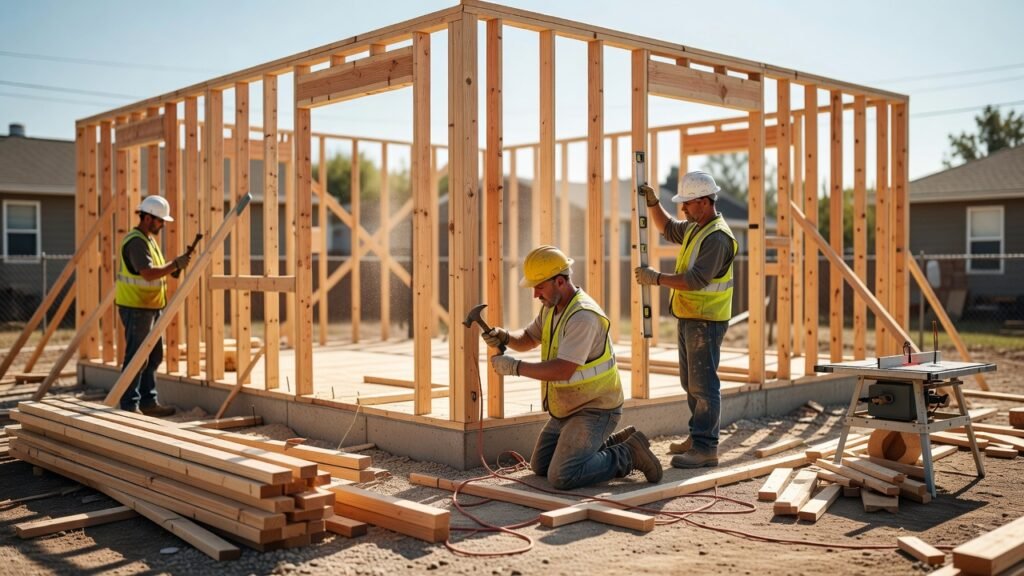
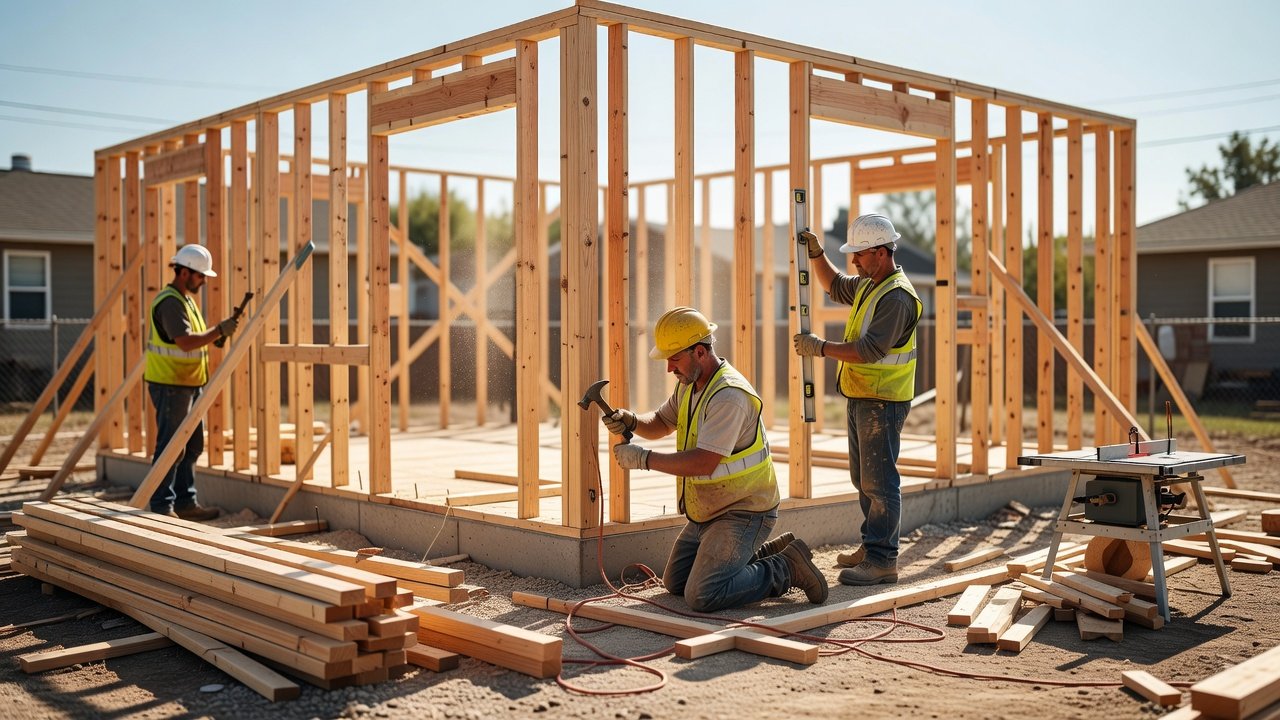
Smart ADU Construction Services Charlotte: 2026 Guide for Charlotte, NC Residents
A homeowner in Plaza Midwood called us last fall with a question we hear more and more often: she had a detached garage sitting mostly unused, her mother-in-law needed a place to land, and she had watched three YouTube videos that made the whole conversion look like a weekend project. She wanted to know what she could reasonably do herself and what she actually needed us for. That conversation is worth having in public, because the honest answer is more nuanced than most contractors will admit.
ADU construction services in Charlotte are in high demand right now, and for good reason. Charlotte’s housing market is expensive, multigenerational living is on the rise, and Mecklenburg County’s 2023 zoning updates made it significantly easier to permit an accessory dwelling unit than it was five years ago. Whether you’re converting a garage in Dilworth, building a detached cottage in NoDa, or finishing an attic space in Ballantyne, the questions around timing, cost, and what you can handle yourself are the same.
What Capable Homeowners Can Handle Themselves
We are not going to tell you that every nail requires a licensed contractor. That would be dishonest, and it would waste your money. There are real tasks a handy homeowner with time and basic tools can take on during an ADU project without compromising safety or code compliance.
- Demo of non-load-bearing interior walls (after confirming they are non-structural with a professional)
- Painting, caulking, and interior finish work once mechanicals are signed off
- Landscaping, grading, and hardscape around the new unit
- Cabinetry installation in kitchenettes, assuming rough plumbing is already roughed in and inspected
- Insulation installation in open stud bays, in jurisdictions where owner-builders are permitted to self-perform
- Tile work and flooring after subfloor passes inspection
The throughline here is sequence. You can safely DIY finish work because it comes after the inspections that matter. The risk of doing your own tile is low. The risk of doing your own electrical rough-in and then tiling over it before an inspector sees it is significant.
Where You Genuinely Need a Licensed Crew
The honest reasons are safety, code, and your investment not contractor protectiveness.
- Structural work: Converting a garage means assessing the existing foundation and framing. A slab poured for a car is not automatically adequate for a living space. Getting this wrong is expensive to fix and potentially dangerous.
- Electrical service and panel upgrades: Most ADUs require a subpanel or a full service upgrade. In Charlotte, this work must be permitted and inspected. Unpermitted electrical work can void your homeowner’s insurance and create liability if you rent the unit.
- Plumbing rough-in: Adding a bathroom or kitchenette means tying into your existing system. Incorrect slope, wrong trap placement, or a missed cleanout will fail inspection and cost more to fix than it would have to do right the first time.
- HVAC design and installation: A 600-square-foot ADU in Charlotte’s climate needs a properly sized system. Undersizing it causes the unit to run constantly and still be uncomfortable in August. Oversizing creates humidity problems. Manual J load calculations are not optional.
- Permitting and code navigation: Mecklenburg County’s ADU permitting process involves zoning approval, building permits, and in some cases stormwater review. Our project managers handle this regularly and know which reviewers need what documentation, which cuts weeks off the timeline.
“A 2024 Harvard Joint Center for Housing Studies report found that homeowners who invest in professional renovation see 15–20% higher satisfaction scores compared to DIY projects of equivalent scope a gap that widens considerably on projects involving permitting complexity.”
The Real Cost of Getting the Structural or Electrical Work Wrong
We have walked through ADU projects in Steele Creek and South End where a previous owner or an unlicensed handyman did the rough work, the homeowner finished it, and the unit was occupied for years without a certificate of occupancy. When the property sold, the buyer’s inspector flagged the unpermitted work. The seller had to either demolish the improvements or bring them up to current code before closing, which in one case cost more than $40,000. That is not a hypothetical. That is a real job we got called to assess in 2024.
OSHA data reinforces what we see in the field: projects managed by licensed general contractors carry significantly lower incident rates than self-managed or unlicensed construction work. Beyond safety, there is the insurance dimension. If a tenant is injured in an unpermitted rental unit, your homeowner’s policy may not cover it.
Why Seasonal Timing Matters More Than Most People Realize
This is the part of the conversation that costs homeowners money when they skip it. In Charlotte, the best window to break ground on an ADU is late winter through early spring January through March. Here is why that timing works in your favor in 2026.
Mecklenburg County’s permit office runs shorter queues in the first quarter. Subcontractor schedules are more open. Material lead times on lumber and structural components are generally shorter than they are in late spring when every custom home builder in the University City corridor and Huntersville is pulling from the same supply chain. Starting in February means your unit is habitable by summer, which is exactly when demand for rental units peaks in Charlotte.
Waiting until May or June, which is when most homeowners finally get serious, means you are competing for every available framing crew in the metro. Our estimators consistently see a 10 to 15 percent premium on subcontractor labor when work is scheduled in peak season versus the first quarter. On a $90,000 ADU project, that spread is real money.
The National Association of Home Builders reported in 2024 that the average kitchen remodel alone runs $25,000 to $75,000 depending on scope and region. A full detached ADU in Charlotte typically runs $110,000 to $185,000 as of 2026, depending on finish level, foundation type, and whether utility connections require trenching. Booking early and locking in subcontractor rates is one of the few ways you can meaningfully control that number.
How We Approach ADU Projects at A1 Construction
Our process starts with a site visit and a zoning check before we talk numbers. Lot coverage limits, setback requirements, and tree canopy rules vary by Charlotte neighborhood and can affect what is actually buildable on your property. We have seen homeowners spend money on architectural drawings for units that could not be permitted as designed. We catch that in week one, not week eight.
If you are also considering a kitchen or bathroom update in your primary home, we regularly bundle both projects under a single mobilization, which cuts overhead costs and compresses the overall timeline. Our crews are already on site it makes sense to use that window efficiently.
The 2025 Remodeling Cost vs. Value Report found that mid-range renovations that add living area recoup a meaningful share of cost at resale. In a market like Charlotte, where rental demand in neighborhoods like Midwood and Cotswold remains strong, a well-built ADU also generates ongoing income that can offset the initial investment within a few years.
If you are thinking about an ADU and want a straight answer about what your lot and budget can support, reach out to our team at A1 Construction and Renovation Service. We will give you an honest picture before you spend a dollar on drawings or permits.
Frequently Asked Questions
How long does it take to get an ADU permitted and built in Charlotte, NC in 2026?
From initial design to certificate of occupancy, most ADU projects in Charlotte run five to nine months. Permitting alone can take six to twelve weeks depending on Mecklenburg County’s review queue and whether your project requires any zoning variances. Starting in the first quarter of the year, when review queues are shorter, typically shaves four to six weeks off the overall timeline compared to summer starts.
Can I legally rent out my ADU in Charlotte right away, or are there restrictions?
You can rent a permitted and inspected ADU in Charlotte once you have received your certificate of occupancy. Short-term rentals through platforms like Airbnb require a separate short-term rental permit from the City of Charlotte. If your ADU was built without permits, you cannot legally rent it and may face code enforcement action if a complaint is filed. Getting the permitting done correctly from the start protects your ability to generate rental income.
What is a realistic budget for ADU construction services in Charlotte in 2026?
A detached ADU with a full bathroom and kitchenette typically runs between $110,000 and $185,000 in the Charlotte metro as of 2026, depending on finish level, foundation type, and utility connection requirements. Garage conversions are generally less expensive, typically ranging from $60,000 to $100,000, because the shell and slab already exist. Attached ADUs, such as finished basement or attic conversions, vary widely based on the existing structure. Our estimators can give you a project-specific range after a site visit.
Related from A1 Construction & Renovation: ADU Construction City · Back Home Our Los Angeles, CA · Back Home Our in Los Angeles, CA


